
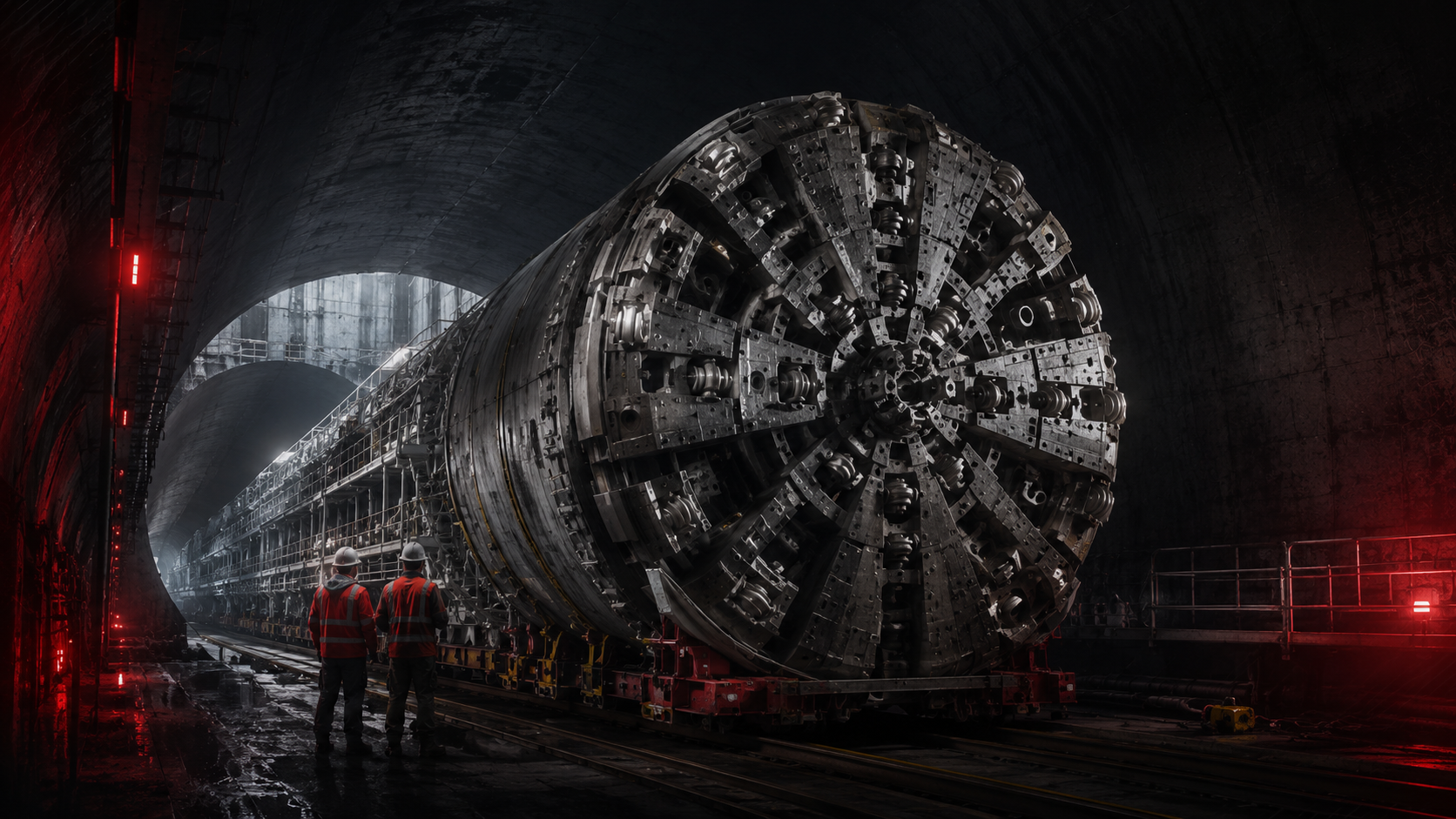
5 Signs Your Construction Site Needs a Safety Program Overhaul
Construction sites are dynamic environments where conditions change daily. What worked for your safety
program two years ago may no longer be enough to protect your crews or keep your projects compliant. Here are
five warning signs that it is time for a serious safety program review.
Construction sites are dynamic environments where conditions change daily. What worked for your safety
program two years ago may no longer be enough to protect your crews or keep your projects compliant. Here are
five warning signs that it is time for a serious safety program review.
1. Your Incident Rate Is Climbing
If you are seeing more near misses, injuries, or close calls than in previous years, that is your safety program
sending a distress signal. A rising incident rate is rarely a coincidence. It usually points to gaps in your Job Hazard
Analysis process, inadequate Pre-Task Planning, or a breakdown in field-level accountability.
2. Your Safety Documents Have Not Been Updated in Over a Year
Cal/OSHA standards evolve. Project scopes change. If your Injury and Illness Prevention Program (IIPP), Code of
Safe Practices, or Site-Specific Safety Plan has not been reviewed recently, you could be operating with outdated
procedures that expose your organization to serious liability.
3. Your Field Teams Are Not Consistently Following Safety Protocols
When safety feels like a checkbox rather than a culture, compliance slips. If supervisors are skipping Pre-Task
Plans, crews are not conducting proper toolbox talks, or audit findings keep repeating, it is a culture problem as
much as a process problem.
4. You Are Struggling to Win Bids Because of Safety Metrics
Many public agencies and general contractors review your Experience Modification Rate (EMR) and safety record
before awarding contracts. A poor safety history can cost you work. Strengthening your program is not just about
compliance. It is a competitive advantage.
5. You Have No One Dedicated to Safety at the Program Level
Field safety and program safety are two different things. If your safety person is only on the ground and no one is
managing safety from a program or executive level, critical documentation, compliance tracking, and strategic
oversight are likely falling through the cracks.
Ready to strengthen your safety program?
Book a free consultation with Susan Delaney at delaneysafety.com
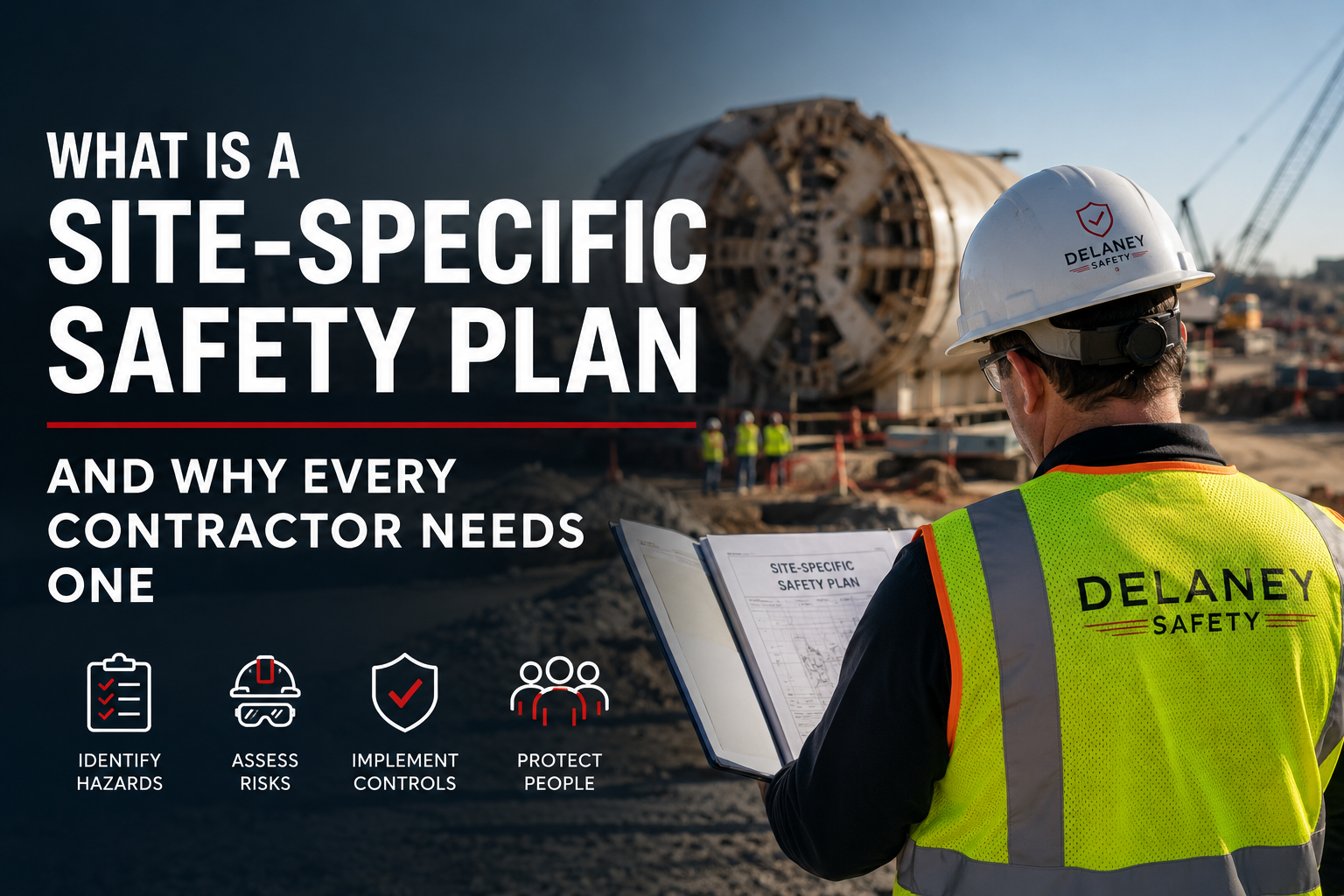
What Is a Site-Specific Safety Plan and Why Every NeedsContractor One
It All Begins Here
If you have ever been handed a generic safety manual and told to make it work for a tunnel boring project or a
multi-agency transportation program, you already know the problem. A one-size-fits-all approach to safety does
not cut it on complex construction projects. That is where a Site-Specific Safety Plan comes in.
What Is a Site-Specific Safety Plan?
A Site-Specific Safety Plan (SSSP) is a customized safety document developed for a particular project, location,
and scope of work. Unlike a corporate safety manual, which covers general policies, an SSSP addresses the
specific hazards, workflows, personnel, and compliance requirements of one project.
What Should a Strong SSSP Include?
• Project-specific emergency contacts and response procedures
• Hazard identification for the unique conditions of that site
• Cal/OSHA and project-specific compliance requirements
• Contractor and subcontractor safety roles and responsibilities
• Site access, orientation, and training requirements
• Incident reporting and root cause investigation process
• Equipment and PPE requirements specific to the scope of work
Why Does It Matter?
Beyond compliance, a well-written SSSP protects your organization in the event of an incident, demonstrates your
commitment to safety to clients and agencies, and gives your field teams clear direction from day one. On
multimillion-dollar infrastructure projects, it is also frequently a contractual requirement.
Who Should Write It?
An SSSP should be developed by someone with deep experience in both construction safety and the specific
market sector of your project. Transportation, telecommunications, utility, and tunnel boring projects each carry
unique hazards that require specialized knowledge. A generic template is a starting point at best and a liability at
worst.
Ready to strengthen your safety program?
Book a free consultation with Susan Delaney at delaneysafety.com
Small Steps Create Big Shifts
It All Begins Here
Why Safety Culture Is Built One Decision at a Time
When people think about improving safety on a large infrastructure project, they often imagine sweeping changes, new programs, or major investments. In reality, the strongest safety cultures are rarely built through one dramatic initiative. They are built through hundreds of small decisions made consistently over time.
Every pre-task plan completed thoroughly. Every near-miss reported honestly. Every supervisor who takes five extra minutes to discuss hazards before work begins. Every employee who chooses to stop a task when something doesn't look right.
These small actions may seem insignificant in the moment, but together they create a culture that protects people, improves performance, and drives long-term project success.
The Compounding Effect of Safety
Safety culture operates much like compound interest.
One toolbox talk won't transform a project. One site inspection won't eliminate risk. One leadership message won't instantly change behavior.
However, when those actions happen consistently, day after day and week after week, they begin to influence how people think, communicate, and make decisions.
Over time, teams stop viewing safety as a compliance requirement and start viewing it as part of how work gets done.
That's where real culture change begins.
Small Actions That Make the Biggest Difference
On multimillion-dollar infrastructure projects, some of the most impactful safety improvements are surprisingly simple:
Conducting meaningful daily safety briefings
Recognizing employees who identify hazards
Following up on corrective actions quickly
Encouraging open communication without fear of blame
Leading by example in the field
Stopping unsafe work before it becomes an incident
Taking time to verify controls before work begins
None of these actions require a massive budget. They require consistency.
Leadership Sets the Tone
Safety culture starts long before workers step onto a jobsite.
When executives, project managers, and supervisors demonstrate that safety is a core value—not just a priority—employees notice.
Teams pay attention to what leadership measures, discusses, rewards, and reinforces.
When leaders consistently support safe work practices, employees gain confidence that safety truly matters.
The result is greater trust, stronger accountability, and better decision-making throughout the project.
The Shift Happens Gradually
The best safety cultures don't emerge overnight.
They develop through thousands of conversations, observations, corrections, and positive examples.
Eventually, something changes.
Employees begin speaking up sooner.
Supervisors become more proactive.
Hazards are identified before incidents occur.
Safety becomes part of the project's identity rather than another item on a checklist.
That's the shift every organization is striving for.
Final Thoughts
Whether you're managing a transportation project, utility upgrade, telecommunications program, or tunnel boring operation, meaningful safety improvements start with small, deliberate actions.
The organizations with the strongest safety records understand a simple truth:
Small steps create big shifts.
At Delaney Safety LLC, we help organizations build sustainable safety cultures that protect people, strengthen performance, and support successful project delivery—from the C-Suite to the field.
Ready to strengthen safety on your next project? Contact Delaney Safety today.

How to Build a Safety Culture on a Multimillion-Dollar Infrastructure Project
It All Begins Here
Safety culture is one of those phrases that gets thrown around a lot in the construction industry. But what does it
actually look like on a large-scale infrastructure project with multiple contractors, government agencies, and
hundreds of workers on site? Here is what experience on multibillion-dollar transportation and water projects has
taught us.
It Starts at the Top
If your C-Suite and executive leadership do not visibly champion safety, no one below them will take it seriously.
That means attending safety meetings, asking about safety metrics in project updates, and holding leadership
accountable when safety standards slip. Culture flows downhill. Make sure what is flowing is worth following.
Safety Has to Be Built Into the Process, Not Bolted On
When safety reviews, Pre-Task Plans, and Job Hazard Analyses are treated as administrative burdens rather than
operational tools, crews find ways around them. Embed safety into your project management workflow from
pre-construction planning through final closeout so it is never an afterthought.
Contractors and Subcontractors Must Be Held to the Same Standard
On large programs, it is common for the general contractor to have strong safety practices while subcontractors
operate with less oversight. This creates serious exposure. Auditing contractor safety compliance, reviewing their
IIPPs, and requiring consistent documentation across all tiers of the project is essential.
Near Misses Are Gold If You Use Them Right
A near miss is a free lesson. Organizations with strong safety cultures treat near miss reporting as a gift, not a
liability. Build a reporting process that is psychologically safe, conduct real root cause analysis, and close the loop
with corrective actions that the whole team can see.
Invest in Training That Actually Sticks
A one-hour onboarding video does not build a safety culture. Effective safety training is hands-on, role-specific,
and reinforced regularly. Whether you are training 20 employees or 200, the content needs to be tailored to the
hazards your crews actually face on that specific project.
The Bottom LineBuilding a genuine safety culture on a large infrastructure project does not happen by accident. It requires
consistent leadership, well-designed systems, and someone at the program level whose entire focus is making
sure safety is woven into every aspect of the work. That is exactly what Delaney Safety does.
Ready to strengthen your safety program?
Book a free consultation with Susan Delaney at delaneysafety.com